 niccleave
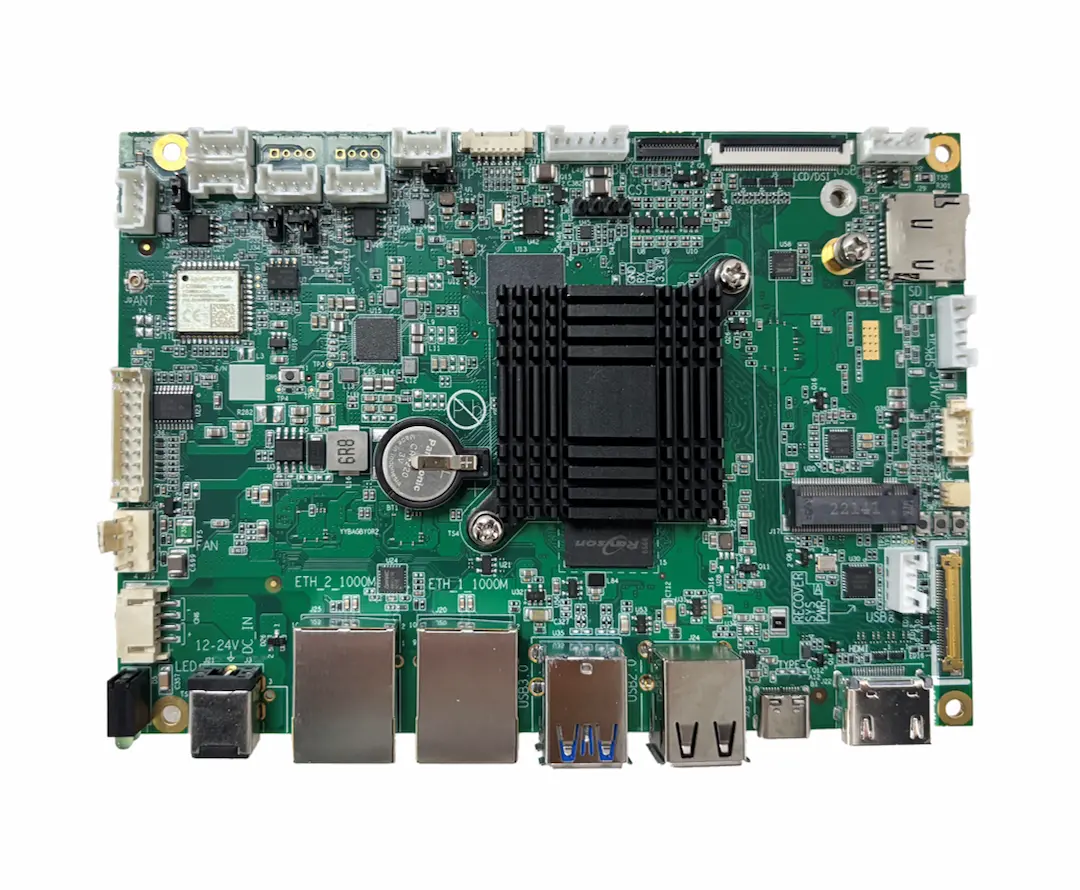
A rugged single board computer may control an AGV, gateway, or inspection station in a cabinet that sees winter cold, summer heat, dust, and vibration. Vantron’s embedded-board category lists industrial interfaces, vibration resistance, EMC protection, and a stated operating range from -40°C to 80°C.
That range is a starting point, not a complete qualification plan. Temperature affects processors, storage, regulators, batteries, displays, cables, and solder joints in different ways. Your design needs thermal margin, mechanical discipline, software validation, and a service plan that match the actual installation.
What Does Extended Temperature Actually Require?
An extended-temperature specification describes the conditions under which a defined hardware configuration is intended to operate. It is different from a short laboratory exposure or a storage rating. You should identify the active workload, input power, enclosure, peripherals, and mounting position before treating a number as relevant.
Cold changes more than the processor clock. Lubricants can thicken, displays can respond slowly, batteries can provide less usable energy, and condensation can appear when a cold system enters a humid space. A fleet computer starting inside an unheated vehicle therefore needs a startup test, not only a steady-state temperature test.
Heat reduces thermal margin and can accelerate aging in capacitors, storage, connectors, and power components. An outdoor energy gateway or machine controller may sit in a closed enclosure that is hotter than the surrounding air. Test boot, continuous processing, network traffic, storage activity, and recovery at the expected temperature extremes.
Thermal Margin Depends on the Complete Assembly
The processor is only one heat source. Voltage regulators, memory, storage, wireless modules, and interface transceivers also dissipate energy. A fanless board transfers that heat through its spreader, chassis, mounting plate, or surrounding air. The same board can behave differently in an open test fixture and a sealed industrial box.
Mounting is part of the thermal design. A metal plate can help carry heat away, while an insulated bracket can trap it. Cable bundles may block vents or press against heat-spreading surfaces. For an AGV, inspect the board after navigation, wireless communication, camera processing, and charging-related activity have all occurred in the same operating cycle.
A stated -40°C to 80°C range does not mean every attached component has the same qualification. Confirm the temperature limits of the power supply, SSD or other storage, display, battery, connector system, and enclosure seals. The finished device should be tested as an assembly, with the software workload that will run in the field.
Mechanical Design Protects the Board Across Temperature Cycles
Temperature changes create expansion and contraction in the board, chassis, fasteners, and connectors. Different materials expand at different rates. Repeated cycling can stress solder joints, loosen fasteners, or change contact pressure. Use appropriate mounting points, keep the board supported, and review the mechanical stack rather than treating the PCB as an isolated part.
Vibration adds another load. A vehicle gateway, warehouse robot, or machine controller may experience repeated shocks while its processor and storage remain active. The embedded-board category describes vibration resistance and EMC protection, but the final result still depends on fastening, cable strain relief, storage selection, and the vibration profile of the host machine.
Ingress protection also needs a system boundary. A sealed enclosure can keep out dust and moisture, but cable glands, connector backshells, vents, and mounting penetrations can become weak points. If the board is installed near washdown equipment or condensation, qualify the enclosure and cable routing together with the board.
Interfaces and Software Affect Temperature Qualification
A processor-intensive application can change the thermal result even when the board specification remains unchanged. An inspection system running cameras, local inference, storage, and network traffic creates a different load from a controller that reads sensors periodically. Measure the application’s sustained state, not only a short boot sequence or idle condition.
The operating system also controls power states, thermal policies, watchdog behavior, storage access, and recovery. The category supports Linux and Windows, so select the system image, drivers, and update process with the hardware configuration. An ARM board will not run legacy x86 binaries without a porting or compatibility cycle, which can add software work to a temperature-sensitive redesign.
Review interfaces under the same conditions. GPIO, UART, CAN, SPI, and M.2 connections can support a fleet vehicle, energy controller, or factory sensor hub, but their transceivers, cables, and attached devices contribute to power and heat. Your test plan should include the actual peripherals, data rates, and cable lengths.
For projects using industrial embedded single board computers, compare ARM and x86 platforms, 3.5-inch, Mini-ITX, and Pico-ITX formats, interface requirements, operating systems, and long-term availability as one decision. Do not choose a board from the temperature line alone. Form factor and cable layout can change the thermal and maintenance outcome.
Choose the Board From the Field and Lifecycle Plan
Choose a rugged board when the deployment exposes the computer to temperature variation, vibration, dust, or electrical noise and the project can validate the complete assembly under those conditions. A warehouse robot, roadside gateway, and outdoor control cabinet each require different combinations of thermal transfer, enclosure protection, storage, and service access.
Vantron has more than 20 years of embedded experience and over 200 research personnel from a variety of fields. A supplier review can cover lifecycle planning, replacement units, documentation, FAE support, and software maintenance alongside the initial temperature test. Custom OS, I/O, enclosure, or logo requirements can be evaluated in the final design stage.
The practical rule is to select the board whose complete system passes startup, continuous-load, temperature-cycle, vibration, interface, and recovery tests. A rugged single board computer is a useful foundation, but its field performance comes from the board, enclosure, software, peripherals, and mounting method working within the same qualified envelope. Vantron is one supplier example to include in that review.