 niccleave
Physical contaminant detection is not a one-size-fits-all proposition. Food processors regularly confront the question of whether to install a metal detector or an X-ray inspection system — and the answer depends on far more than budget.
These two technologies operate on fundamentally different physical principles, detect different types of hazards, and respond differently to the same product conditions.
Understanding what each can and cannot do is the first step toward a detection strategy that actually protects the brand, and suppliers like Easyweigh provide both options to match specific production realities.
Two Technologies, Two Different Logics
A metal detector does not “see” contaminants in the way a camera does. It generates an electromagnetic field through a set of coils. When a metallic particle passes through this field, it disrupts the balance, triggering a signal that indicates contamination. The machine detects the electrical disturbance caused by conductive materials — ferrous metals, non-ferrous metals like aluminum, and stainless steel.
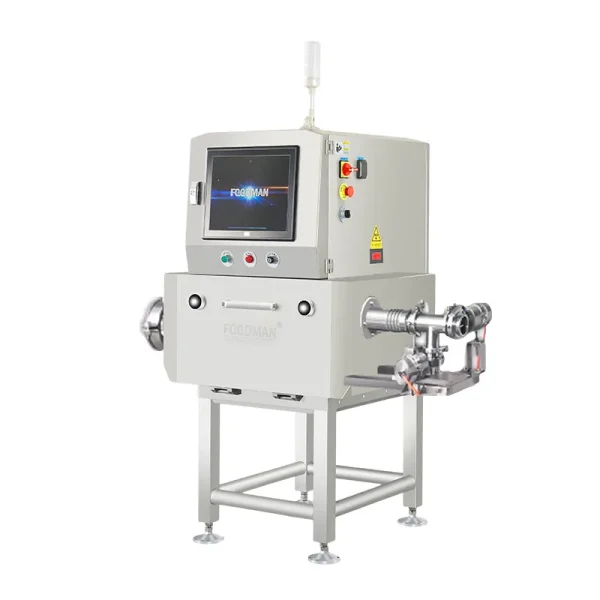
An X-ray inspection system works on an entirely different principle. It transmits X-ray beams through the product and measures the density of materials inside. Dense objects — whether metal, glass, stone, or bone — absorb more radiation and appear as distinct shapes on the resulting image.
This is why X-ray systems can detect non-metallic contaminants that metal detectors simply cannot see. The choice between them is not about which is “better” — it is about which detection logic matches the actual risks on a given production line.
What Each Technology Actually Sees
A metal detector is highly sensitive to metal contaminants, capable of spotting ferrous particles, non-ferrous metals, and stainless steel. It is cost-effective, flexible in installation, and performs well with dry, unpackaged products.
But its capabilities stop at metals. Glass shards, stone fragments, calcified bone, and dense plastics are invisible to electromagnetic detection.
X-ray systems detect a far broader spectrum of foreign materials: metals (including those inside foil packaging), glass, stones, ceramic fragments, bones, and some high-density plastics. They can also perform additional quality checks — verifying fill levels, detecting missing components, or identifying product defects.
The sensitivity of food X-ray inspection equipment can reach 0.3mm for stainless steel balls and detect contaminants as small as 0.2mm diameter wires. This broader detection capability is why many facilities are moving beyond metal detectors alone, and Easyweigh’s dual-technology portfolio supports that transition.
The Product Effect Problem
This is where many processors discover that their metal detector is not performing as expected. Metal detectors are sensitive to the electrical conductivity of the product itself. High moisture content, salt, and fat can generate signals that mask or mimic metal contamination.
A frozen product behaves differently from a thawed one. A warm loaf of bread reads differently than a cooled one. These “product effects” force operators to reduce sensitivity or accept higher false reject rates.
X-ray inspection is not affected by temperature, moisture, or salt content. It measures density, not conductivity. A wet product and a dry product present the same detection challenge to an X-ray system. This makes X-ray technology particularly valuable for meat, seafood, dairy, and other high-moisture applications where metal detectors struggle.
For these applications, food X-ray inspection equipment offers a distinct advantage because it does not suffer from product conductivity issues. For processors running wet or salty products, the stability of X-ray detection often justifies the higher capital investment.
Where Metal Detection Still Excels
Despite the broader capabilities of X-ray, metal detection remains the right choice for many applications. For processors whose only contamination risk is metal — and where products are dry and low in conductivity — a metal detector delivers reliable protection at a fraction of the cost.
Metal detectors have a longer operational lifespan, typically two to five times that of X-ray systems. They require less maintenance, generate no radiation safety concerns, and can be installed in locations where X-ray systems would be impractical.
Free-falling products, for instance, can only be inspected with gravity-fall metal detection systems. X-ray systems require stable product positioning and consistent speed.
Metal detectors are also more tolerant of harsh environments — they handle temperature extremes, dust, and moisture better than X-ray equipment. The decision is not about which technology is more advanced; it is about which technology fits the specific production conditions and contamination risks.
Making the Call: A Practical Framework
The choice between metal detection and X-ray inspection comes down to three questions. First: what contaminants are most likely? If the answer is only metal, and the product is dry and unpackaged, a metal detector may be sufficient.
Second: what is the product composition? High moisture, salt, or fat content pushes the decision toward X-ray. Third: what additional value does X-ray provide? The ability to detect glass, bone, and stone, combined with quality checks like fill-level verification, may deliver returns beyond simple contamination detection.
Many processors ultimately deploy both technologies at different points in the same line. Metal detectors catch metal contaminants early in processing; X-ray systems provide comprehensive end-of-line inspection.
Easyweigh manufactures both technologies and integrates them into unified inspection solutions, allowing facilities to match detection capability to risk at each stage of production. When evaluating food X-ray inspection equipment, processors should consider the total cost of ownership, including maintenance and consumables.
As an original equipment manufacturer, Easyweigh delivers both standard‑specification machines and custom OEM / ODM solutions to adapt equipment for unique line layouts and special processing requirements. Prospective buyers can submit real product samples for professional performance testing before final procurement decisions.
The trend in food safety regulation is toward broader detection requirements for physical foreign‑object hazards. Glass, stones and calcified bone represent significant physical‑contamination risks that conventional metal detectors cannot identify.
For processors whose products are vulnerable to non-metallic contaminants — or who operate in high-moisture environments — X-ray inspection is not an upgrade; it is a necessity.
But for dry, low-risk applications, a well-specified metal detector remains a reliable, cost-effective solution. The right technology is the one that matches the actual hazard profile of the product — and that alignment is the foundation of any effective food safety program.