 niccleave
Thermal management is becoming a decisive engineering factor as battery systems increase in capacity, power density, and operating complexity. In energy storage applications, temperature affects performance, efficiency, component life, and operational reliability. As a result, thermal design can no longer be treated as an isolated engineering function.
For battery manufacturers, energy storage system integrators, equipment suppliers, and project developers, understanding thermal technologies is essential when evaluating complete solutions. An energy storage show provides a useful environment for examining how cooling, monitoring, battery design, and system controls interact across the energy storage value chain.
Why Thermal Management Matters in Energy Storage Systems
Battery cells generate heat during charging and discharging, with thermal behavior influenced by operating conditions, electrical load, cell chemistry, system design, and environmental temperature. Poor heat management can create uneven temperature distribution and reduce the consistency of battery operation.
For commercial and utility-scale energy storage, thermal performance becomes particularly important because large battery systems contain many cells, modules, racks, and power electronics operating within a shared installation. The objective is therefore not simply to remove heat, but to maintain an appropriate and consistent thermal environment throughout the system.
This makes thermal management a system-level consideration alongside battery design, battery management systems, power conversion equipment, and energy management.
Thermal Management Appears Across the Battery Value Chain
The Battery Show Asia places thermal management within a broader ecosystem that includes advanced battery products, battery development and supply chain technologies, energy storage systems, power and energy solutions, and new energy mobility. Its conference content also addresses technology innovation, industrial development, and emerging applications.
For visitors, this structure makes it easier to examine thermal management in context. A cooling solution may influence battery pack layout, sensing requirements, control strategies, maintenance planning, and overall system architecture.
At a specialist battery conference, discussions around thermal behavior can therefore provide value to both component suppliers and system-level decision-makers. Engineering teams can compare technologies while considering how those technologies affect the rest of the battery system.
Liquid Cooling and System-Level Integration
As energy storage systems become more powerful, thermal solutions must accommodate increasingly demanding operating profiles. Liquid-cooling approaches can become relevant where higher heat-transfer performance and more controlled temperature management are required.
However, selecting a cooling method is only one part of the engineering process. Integrators must consider interfaces between the thermal system, battery modules, sensors, controls, pumps, heat exchangers, and other system components.
The 2026 conference agenda at The Battery Show Asia specifically included a session titled “Integrated Solutions for Batteries and Vehicle Thermal-Management.” Although focused on mobility, the topic demonstrates the event’s emphasis on integrated thermal engineering rather than isolated component development.
Temperature Monitoring Supports Better Control
Thermal management depends on accurate information. Temperature sensors and monitoring systems provide the data required for battery management and system control, helping operators identify abnormal temperature conditions and maintain appropriate operating parameters.
For energy storage projects, monitoring should be considered together with the battery management system and energy management architecture. The quality and location of temperature measurement can affect how effectively the system responds to changing loads and environmental conditions.
This is one reason technical buyers should evaluate thermal management alongside sensing, control, and software capabilities. A cooling system without effective monitoring may not deliver the same system-level value as a coordinated thermal and control architecture.
Thermal Design Influences Battery Performance
Battery systems often need to operate across changing power demands and environmental conditions. Excessive temperature variation between cells or modules can create inconsistent operating conditions, making thermal uniformity an important design consideration.
At an energy storage show, system integrators can compare approaches to thermal design alongside batteries, power electronics, energy management technologies, and complete storage systems. This broader perspective can help decision-makers assess whether a solution is suitable for its intended operating environment rather than judging cooling technology by a single specification.
For manufacturers, thermal design can also influence packaging, available installation space, component placement, maintenance requirements, and system scalability.
Safety Requires an Integrated Thermal Strategy
Thermal management also has an important relationship with battery safety. Large energy storage installations require coordinated attention to battery monitoring, system controls, equipment design, and safety strategies.
The Battery Show Asia’s conference framework includes policy and standards, technology innovation, end-user applications, and industry collaboration. Its 2027 conference overview also identifies “Comprehensive Battery Safety Solutions Across Lifecycle” as a planned technical track.
This lifecycle perspective is relevant because thermal considerations do not end once a storage system is commissioned. Equipment selection, operating conditions, monitoring, maintenance, and long-term system management all influence thermal performance.
What Buyers Should Evaluate at an Energy Storage Show
For procurement and engineering teams, a useful evaluation should extend beyond advertised cooling capacity. Important questions include how the thermal system integrates with the battery architecture, how temperature is monitored, how controls respond to changing conditions, and how the design scales across different system configurations.
Reliability and maintenance are also relevant to commercial projects. Buyers may need to examine component accessibility, operating requirements, control interfaces, environmental suitability, and compatibility with the wider energy storage system.
A specialist battery conference can complement these technical evaluations by providing access to industry experts, market analysis, and discussions about emerging technologies and applications.
The Battery Show Asia Connects Thermal Technology With the Wider Market
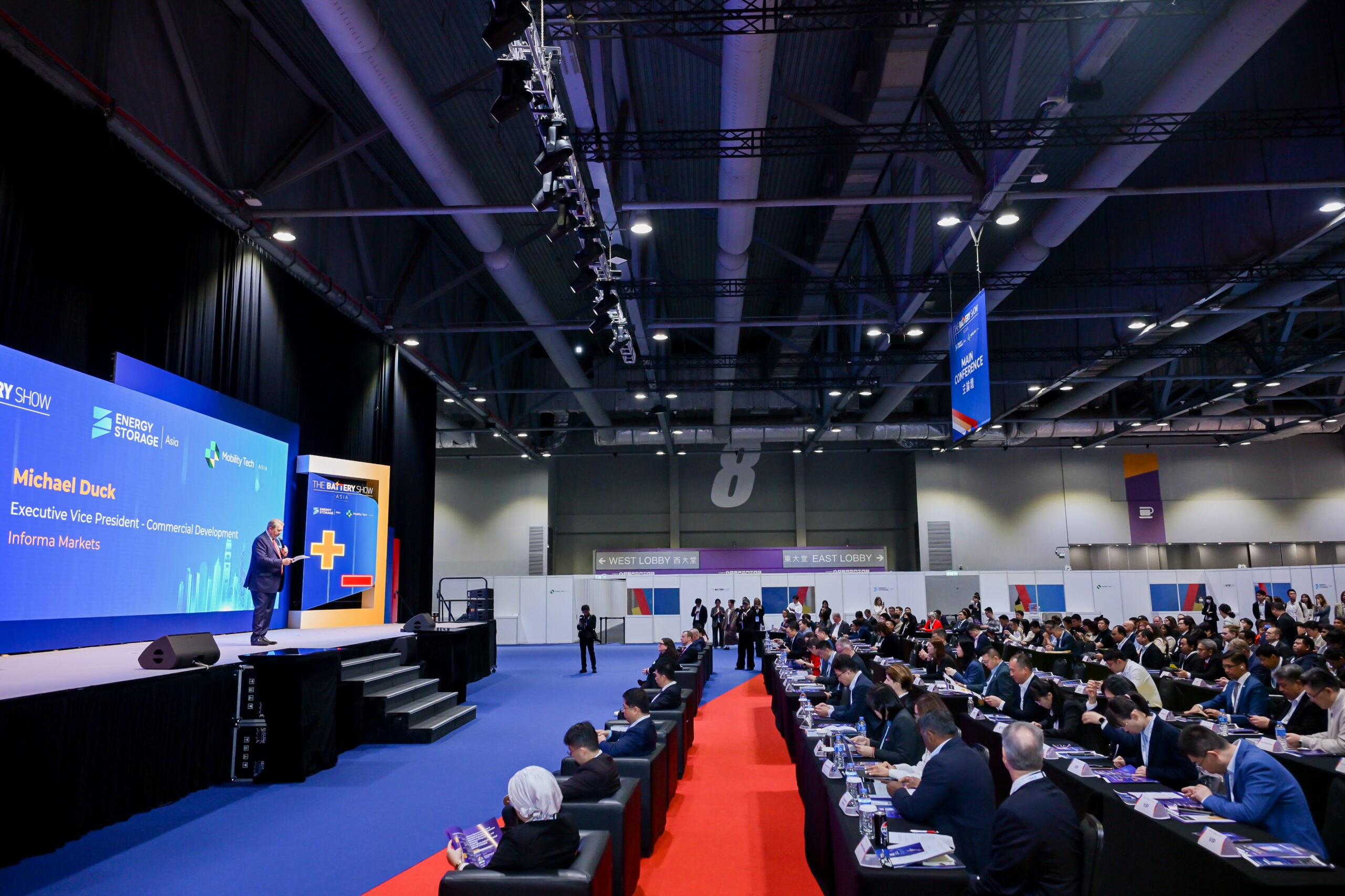
The 2026 edition of the Battery Show Asia brought together more than 200 exhibitors showcasing over 1,000 technologies and products. The event attracted 15,367 professional buyers from 103 countries and regions, with international buyers accounting for 62.1% of attendees.
The exhibition covered advanced batteries, storage technologies and engineering, energy storage systems, equipment and digital solutions, power systems, charging infrastructure, and electric and hybrid solutions. This cross-industry structure gives thermal technology suppliers access to a wider range of potential customers and integration partners.
The conference added another layer of technical exchange. The 2026 edition delivered 147 high-level sessions featuring 132 industry leaders and technical experts, with discussions spanning battery breakthroughs, energy storage solutions, e-mobility technologies, market trends, policy developments, and technology innovation.
A Strategic Area for Energy Storage Development
Thermal management is increasingly connected to nearly every major layer of battery system engineering. Cell design, module architecture, monitoring, control, power conversion, safety, and system operation all influence the thermal behavior of an energy storage installation.
That makes thermal technology an important topic for anyone evaluating the next generation of storage systems. The value of an energy storage show lies not only in seeing individual cooling technologies, but in understanding how they fit into complete system architectures.
The Battery Show Asia is scheduled to return to AsiaWorld-Expo in Hong Kong from July 14–16, 2027, alongside Energy Storage & Power Asia and Mobility Tech Asia. The event will continue to connect battery manufacturing, energy storage, power and energy, and new energy mobility sectors with international professionals.
For system integrators and technology buyers, advanced thermal management deserves the same strategic attention as battery chemistry, power conversion, and energy management. A well-designed thermal architecture can influence efficiency, reliability, safety, and long-term operating performance, making it a critical part of modern energy storage engineering.