 niccleave
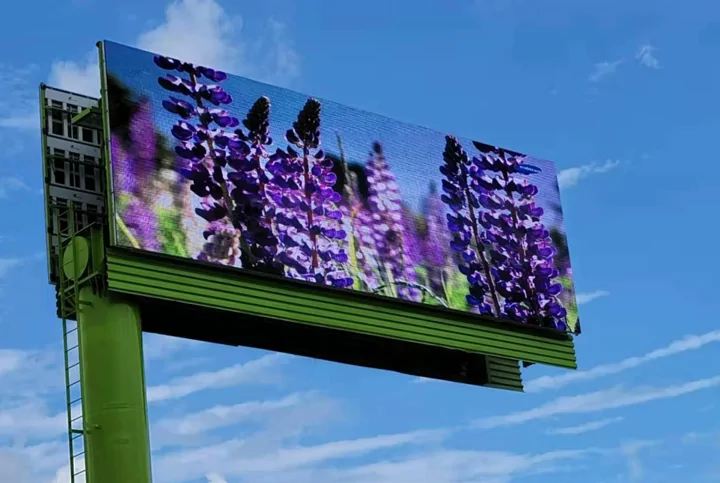
Busy roads, commercial districts, transit hubs, and public squares place very different demands on digital signage. Visibility depends on more than screen size; traffic speed, viewing distance, sunlight, pixel pitch, and local brightness rules all influence the final specification. Outdoor LED display selection therefore works best when the physical environment is assessed before equipment is compared. Ledman’s outdoor solutions provide one example of how display engineering can address these practical conditions without making the technology itself the center of the decision.
Start With Traffic Speed and Viewing Distance
Vehicle speed changes how quickly viewers can process visual information. Drivers passing at higher speeds generally need larger visual elements, stronger contrast, and shorter messages, while pedestrians or slow-moving traffic can accommodate more detailed content.
Viewing distance provides another useful reference. Pixel pitch should correspond to the distance between the audience and the display rather than being selected solely according to resolution preferences. A smaller pitch can support finer details at close range, whereas larger spacing may be appropriate when viewers remain farther away.
Screen dimensions also deserve attention. Roadside installations often require greater height or width to maintain legibility across changing distances, while retail locations may have more flexibility because audiences can approach the screen. Advertising LED display screen planning should therefore begin with an audience map instead of a standard size assumption.
Account for Daylight and Brightness
Sunlight can significantly affect perceived contrast. Direct exposure, reflections from nearby buildings, and seasonal changes may all alter how clearly text and images appear. High-brightness environments call for display specifications capable of maintaining readable content without relying on excessive brightness throughout the day.
Automatic brightness adjustment can make the operating profile more practical. During bright afternoon conditions, higher output may be useful; after sunset, excessive luminance can become uncomfortable and may conflict with local regulations.
Ledman’s NS Series illustrates this approach with pixel-pitch options of 5.7mm, 6.66mm, 8.88mm, and 10mm. The series is designed for high-brightness environments and is also specified as using 25% less energy than other display boards at the same brightness level. Such characteristics matter when an installation operates for long periods rather than only during peak advertising hours.
Match Pixel Pitch to Content
Content type should influence the technical specification just as much as physical location. Large headlines, logos, directional information, and simple animations do not necessarily require the same pixel density as detailed product photography or close-up video.
For distant roadside audiences, larger text and restrained visual layouts often produce better comprehension than dense creative material. A nearby storefront installation can justify finer detail because viewers have more time to inspect individual elements.
Screen resolution should therefore be evaluated together with viewing distance. Outdoor LED display projects intended for mixed audiences may benefit from defining several viewing zones and checking whether the chosen pitch remains visually comfortable across each one.
Consider Local Brightness Regulations
Brightness is not solely a technical specification. Municipal authorities may impose restrictions on digital signage, particularly near residential areas, intersections, or locations where excessive illumination could distract road users.
Project teams should check applicable planning rules before installation. Requirements can differ according to operating hours, road classification, surrounding land use, and proximity to traffic signals. Content scheduling may also need adjustment if lower nighttime brightness is required.
A sensible specification balances daytime visibility with responsible nighttime operation. For an advertising LED display screen, brightness control, installation orientation, and operating schedules can work together to reduce unnecessary output while preserving useful communication.
Assess Installation and Long-Term Operation
Physical access affects both project planning and future maintenance. Outdoor installations may require structural supports, weather protection, electrical distribution, ventilation, and safe access for service personnel. These factors can influence the overall project budget just as significantly as the LED panels themselves.
Maintenance access deserves attention before construction begins. Ledman NS Series outdoor displays support both front installation and front-and-rear maintenance, giving project planners more flexibility when considering site conditions. Such an arrangement can be useful where rear access is limited, although the appropriate maintenance method still depends on the mounting structure and available service space.
Energy consumption should also be included in lifecycle calculations. Electricity costs accumulate across thousands of operating hours, so a display with lower power demand at comparable brightness can affect the long-term economics of the installation.
Build a Specification Around the Site
No single specification suits every high-traffic location. Road speed establishes how quickly information must be understood, viewing distance influences pixel pitch, and ambient light determines practical brightness requirements. Local regulations then add another layer that should be checked before procurement.
Content strategy belongs in the same evaluation. Short messages and bold graphics work well where attention is brief, while locations with longer dwell times can support richer visual communication. Once these variables are mapped, screen dimensions and technical parameters become much easier to justify.
Cost comparisons should also include structure, electrical work, installation, maintenance access, energy consumption, and content management rather than focusing only on panel prices. This broader approach gives an outdoor LED display project a more realistic financial and operational framework.
Conclusion
High-traffic digital signage succeeds when engineering choices reflect the environment rather than relying on generic specifications. Traffic patterns, viewing zones, daylight conditions, pixel pitch, brightness controls, regulations, and maintenance access all deserve consideration before procurement. Careful evaluation also helps distinguish equipment that merely fits the site from solutions suited to its operating demands. With options such as the NS Series and broader display technologies available from Ledman, project planners can assess technical performance alongside practical installation and operating requirements.