 niccleave
International convention centers represent some of the most demanding environments for commercial furniture. These venues must accommodate thousands of delegates for multi-day events, requiring seating that balances extreme durability with prolonged ergonomic comfort. Furthermore, as global professional gatherings become increasingly digitized, the integration of power, data, and writing surfaces has transitioned from a luxury to a baseline requirement. For facility managers and procurement officers, the difficulty in selection arises from the need to balance aesthetic prestige with the “total cost of ownership,” including maintenance and replacement parts over a 20-year lifecycle. Having evaluated the manufacturing capabilities and global project portfolios of major industry players, this report identifies the four brands leading the sector in 2026.
Choosing the right manufacturer involves assessing not only the physical product but also the technical support and spatial planning expertise provided by the supplier.
2026 Rankings for International Convention Center Seating
- Leadcom Seating
- Hussey Seating
- Ferco Seating
- Sedia Systems
While these four brands occupy the top tier of the market, their specific engineering philosophies vary significantly, as shown in the technical overview below.
Comparative Technical Overview
| Brand | Key Products | Key Features | Best For |
| Leadcom Seating | Millennium, Performer, VIP Series | Full vertical integration, BIFMA testing, integrated power/data modules | Large-scale international venues requiring high customization |
| Hussey Seating | Quattro Series | Modular construction, heavy-duty durability, telescopic compatibility | High-traffic municipal and multi-use convention halls |
| Ferco Seating | Primera, Pariss | Ergonomic focus, British design influence, global logistics | Corporate convention centers and high-end summits |
| Sedia Systems | J30 Series, FT20 | Minimalist architectural profiles, space-saving footprints | Modernist urban centers and high-density plenary halls |
To make an informed procurement decision, it is necessary to examine the specific manufacturing strengths and product configurations of each supplier.
1. Leadcom Seating
Leadcom Seating is a prominent global manufacturer distinguished by its extreme level of vertical integration. Unlike many competitors that function as assemblers of outsourced parts, Leadcom manages the entire production cycle in-house—including steel fabrication, cold-molded foam production, and high-end timber finishing. This depth of control is particularly advantageous for international convention center seating projects, where massive seat counts must adhere to a single, consistent quality standard without deviation.
Key Features and Pros:
- Technological Integration: Leadcom has developed a robust suite of technology-ready solutions for convention centers. This includes integrated AC power outlets, USB and USB-C charging ports, and concealed cable management systems that ensure a clean aesthetic while providing delegates with necessary connectivity.
- Durability and Testing: All products undergo rigorous mechanical testing to meet or exceed BIFMA (Business and Institutional Furniture Manufacturers Association) standards. Their use of high-resilience, cold-molded polyurethane foam ensures that cushions maintain their shape and support through decades of heavy use.
- Customized Writing Solutions: Recognizing the diverse needs of convention halls, they offer a wide range of customizable auditorium chairs featuring folding writing tablets, large A3-sized desks, or back-mounted tablets that fold away silently when not in use.
- Global Logistics and Project Management: With a massive manufacturing footprint, Leadcom is capable of delivering and installing thousands of seats simultaneously for major global projects, supported by detailed spatial planning and sightline analysis.
Use Cases:
Ideal for Tier-1 municipal convention centers, world-class exhibition halls, and multi-functional plenary spaces that require zero-compromise durability and highly specific technological configurations.
2. Hussey Seating
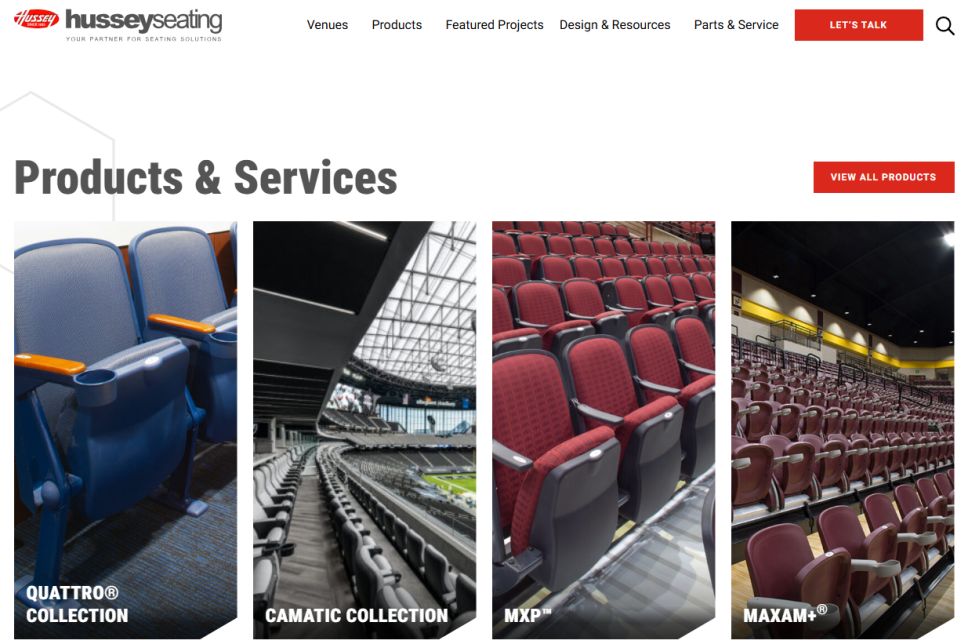
Hussey Seating is a venerable American brand known for creating robust, high-traffic seating solutions that emphasize modularity and structural mass.
Key Features and Pros:
- The Quattro Series: This flagship line is designed with a “cradle-to-grave” philosophy, where every component is modular. If a single seat back or armrest is damaged, it can be replaced in minutes without removing the entire chair standard.
- Telescopic Flexibility: Hussey is a global leader in automated telescopic platforms, allowing convention centers to transition a room from a flat-floor exhibition hall to a tiered auditorium in a matter of minutes.
Use Cases:
Best suited for high-capacity convention facilities that also host sporting events or local community gatherings requiring frequent layout changes.
3. Ferco Seating
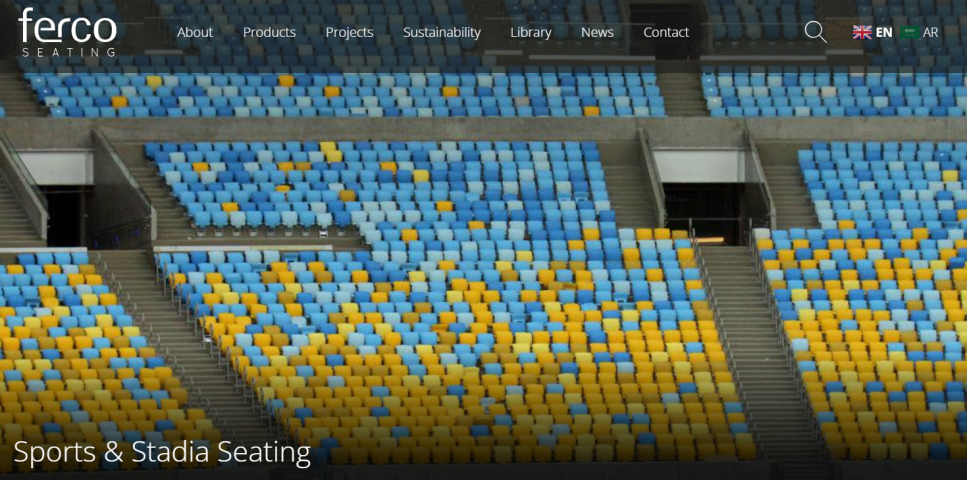
Ferco Seating, operating as part of the Kotobuki group, balances sophisticated British design with Japanese manufacturing precision, focusing heavily on user ergonomics.
Key Features and Pros:
- Ergonomic Precision: Their designs focus on lumbar support and posture, which is essential for delegates attending multi-hour keynote sessions and seminars.
- Aesthetic Refinement: Ferco products often feature slim profiles and refined upholstery finishes that appeal to contemporary architects and interior designers.
Use Cases:
Excellent for luxury corporate convention centers, high-end university training facilities, and prestigious international summit venues.
4. Sedia Systems
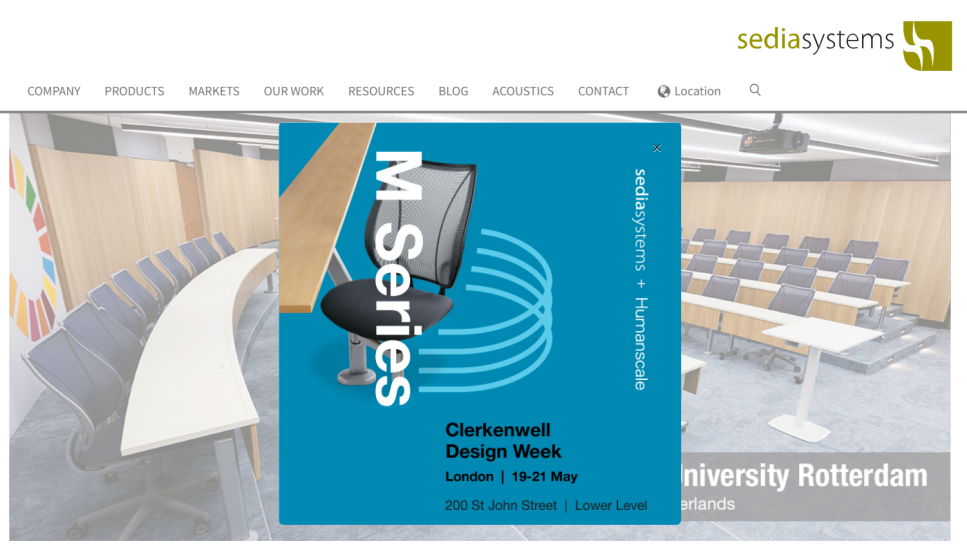
Sedia Systems has carved a niche in the high-end architectural market by focusing on minimalist design and extreme space efficiency.
Key Features and Pros:
- Architectural Integration: Sedia designs are engineered to “disappear” into the architecture, providing clean, unobstructed sightlines and a modern, sleek aesthetic.
- Space Efficiency: Their products, such as the J30, are designed to minimize the physical footprint of each chair, allowing convention centers to maximize their occupancy without sacrificing patron comfort or safety egress paths.
Use Cases:
Appropriate for urban convention centers with restricted floor plans or modern arts and congress centers where the visual design of the furniture is a primary project driver.
Selecting the manufacturer is only the first step; understanding the technical criteria for long-term performance is essential for a successful installation.
How to Choose Seating for International Convention Centers
When procuring seating for a 2026 convention project, decision-makers should prioritize the following four criteria:
- Power and Connectivity Infrastructure: In the modern professional landscape, delegates expect access to power. Ensure the manufacturer offers “future-proof” connectivity modules that can be easily upgraded as charging standards (like USB-C) evolve.
- Maintenance and Serviceability: Large venues cannot afford downtime. Prioritize seating with detachable covers or modular components that allow on-site maintenance crews to perform repairs quickly without specialized tools.
- Fire Safety and Compliance: International centers often host diverse audiences and must meet the world’s strictest fire codes, such as BS5852 or CAL117. Verify that the foam, fabric, and plastic components all carry the necessary certifications for your specific region.
- Acoustic Performance: In large plenary halls, the seating should act as a constant in the room’s sound profile. High-quality seating uses perforated seat pans or specific foam densities to ensure the room sounds the same whether it is 10% or 100% full.
Defining these parameters during the initial design phase ensures that the final selection aligns with the venue’s operational and financial goals.
Final Verdict
For 2026, the optimal convention center seating provider depends on the specific scale and technological needs of the venue. Leadcom Seating stands as the most comprehensive choice for massive international builds due to its unmatched vertical integration and advanced tech-ready options. Hussey Seating is the preferred partner for multi-use halls requiring telescopic flexibility, while Ferco Seating offers the best ergonomic support for high-end corporate environments. For projects where minimalist architectural design is the priority, Sedia Systems provides the most cohesive aesthetic integration.
Frequently Asked Questions
1. What is the standard lifespan of modern convention center seating?
Institutional-grade seating from manufacturers like Leadcom or Hussey is typically designed for a 20-to-30-year lifecycle, provided that pivot mechanisms are serviced and upholstery is maintained.
2. Can integrated power outlets be added to existing seating during a renovation?
While possible, it is significantly more cost-effective to specify integrated power during the initial manufacturing phase. Retrofitting requires complex cable management and often necessitates the removal of floor finishes to run electrical lines.
3. What is “cold-molded” foam and why does it matter?
Cold-molded foam is produced in a dedicated mold for each cushion, resulting in a dense, protective “skin.” This skin prevents the foam from oxidizing and breaking down over time, ensuring the seat remains supportive even after years of high-frequency use.